










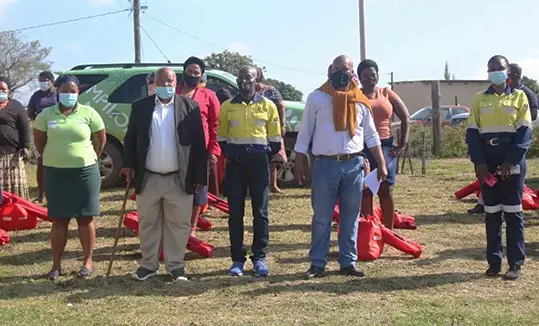


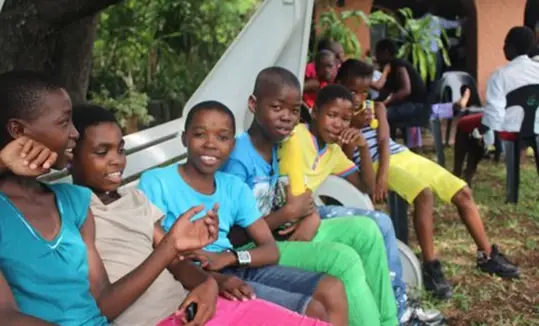

This USAID-funded project identifies and supports over 1,400 patients each year who are infected with Tuberculosis (TB) and Drug-Resistant Tuberculosis (DR-TB) in the uMkhanyakude District of northern KwaZulu-Natal.
More than seventy-four dedicated healthcare workers are continuously equipped with regular, in-depth training sessions focused on the effective identification, treatment, and management of Tuberculosis (TB).
These comprehensive training initiatives are designed to enhance their clinical knowledge, improve patient care, and ensure alignment with the latest protocols and best practices in TB control.
In collaboration with the Department of Health (DOH), healthcare workers carry out regular home visits to ensure that patients adhere to their prescribed treatment plans and effectively manage the disease. This includes monitoring progress through routine procedures such as sputum testing.
All patients diagnosed with TB are also tested for HIV to ensure integrated care. Mpilonhle supports an average of 1,000 TB patients and 300 DR-TB patients each year, providing essential services to improve health outcomes and reduce the spread of the disease.
All family members and community members who are in close contact with individuals diagnosed with TB, particularly DR-TB, are regularly screened for the disease as a preventative measure.
TB suspects are referred to local clinics for further testing and care, with follow-up services provided by Mpilonhle healthcare workers to ensure treatment adherence and ongoing support.
This project operates in close collaboration with the Department of Health, fostering strong partnerships to enhance community health outcomes.
Regular awareness campaigns and community dialogues on TB and HIV are jointly organised and conducted, aiming to educate, engage, and empower community members with accurate information, reduce stigma, and encourage early testing and treatment.

REFERENCE = YOUR NAME or ANONYMOUS
MERCHANT PAM = MPILONHLE ORGANISATION (Ensure you use uppercase)
Donations are tax deductible. Click here to request a section 18A tax certificate

Donations are tax deductible for US citizens
Sanele Bukhosini is a warm and compassionate individual, serving as a Human Rights Ambassador and HIV Testing Counsellor. She is deeply committed to supporting others in navigating their health and life challenges, offering guidance and care to those on their journey toward healing and growth.
Outside of her professional work, Sanele enjoys spending quality time with her family. As a passionate fashion designer, she can often be found sewing and designing, expressing her creativity through her craft.
Philile Jabulisiwe Sibiya is employed as a Social Auxiliary Worker under the MSM program, while also working with cases related to human rights violations and gender-based violence (GBV).
She provides psychosocial support to clients and their families, offering information and assistance with reporting cases that require legal attention. Philile also prepares clients for court appearances.
In addition to direct support, Philile equips her clients with various skills to help them sustain themselves in the long term. She organizes support groups, adherence clubs, and community dialogues to spread awareness about human rights violations and GBV.
When cases are beyond her capacity, Philile refers clients to relevant stakeholders, maintaining strong working relationships with organisations in the King Cetshwayo area.
Nothando Ndabandaba, born at Hlabisa Hospital and residing in the Shikishela area. Nothando completed her foundation and higher education at Shikishela and Nkosana High Schools. She holds a Diploma in Teaching Grade R from SANTS University and is currently pursuing her degree.
Nothando began her professional journey in 2013, working at the Mpilonhle Organisation as a Science and Maths Coach Skills Mentor, a role she held until 2017. During this period, she was responsible for guiding and mentoring maths coaches, as well as working in a computer lab. Her duties also involved training learners in basic computer skills and the rules of the program, and she was based in the Umkhanyakude district.
From late 2017 to March 2019, Nothando worked as a Health and Technology Services (HTS) Counsellor for the Interacted Mobile Unit, where she provided health education to youth aged 10 to 24. Her responsibilities included screening clients for TB and STIs, offering pre- and post-test counselling, and capturing client data in the King Cetshwayo District. In July 2020, Nothando transitioned to a role as a Data Capturer, involved in pre-screening for COVID-19 tests, where she worked until January 2021. Since 2023, Nothando has been serving as a Peer Educator under the MSM (Men who have Sex with Men) project. In this capacity, she offers face-to-face counselling, mobilizes MSM and other men to access healthcare services, and provides information on sexual and reproductive health issues, as well as HIV and AIDS. Her work includes mobile clinic outreach and collaboration with health facilities to disseminate crucial health information. Nothando’s career reflects her commitment to education, health, and empowering others within her community.
Born and raised in Mtubatuba, Zandile Sithole is a passionate, outspoken, gregarious and driven individual who loves jogging, soccer and cooking. She is a mother of two handsome boys, one of whom is in his second year at Durban University of Technology and other one is in Grade 12. She is a highly experienced HIV/AIDS Lay Counsellor with over 10 years of experience in pre-counselling and post counselling in HIV testing. Zandile recently took a refresher course because she likes to stay up to date, especially with her career as a Lay Counsellor. Serving her religion and community as a volunteer has always captivated her. She firmly thinks that helping others is a virtue.
Avile Vundla serves as an HRV Ambassador at Mpilonhle Organization, where her role involves documenting cases referred to Social Workers. She is 33 years old and resides in the Ndlangubo area. Avile is a proud mother of two boys and has sadly lost both of her parents.
Avile joined Mpilonhle in 2024. She completed her matric in 2012 and later pursued an ABET certificate through UNISA. She also obtained a certificate in HIV and AIDS and ART treatment from Indlela Yempilo Academy.
Avile enjoys traditional food and Maskandi music. She has a strong passion for gaining new knowledge from others and is known for her respectful nature.
Thobisile Mthethwa is a 32-year-old who was born in Oshwashweni but raised in Cinci Reserve. She describes herself as a young vibrant energetic and loving individual. She is well known amongst her peers as “Manu” which is a nickname given to her by her mother meaning little one.
Thobisile Mthethwa started working for Mpilonhle in 2017 as a Teen Parenting Facilitator she is now a Linkage Officer, where she is responsible for supporting the HIV and TB by linking and navigating patient through referral processes and ensuring linkage to care. Daily activities also include conducting tracing of clients who have missed their appointments or defaulted from care, ensuring adherence to DOH policies, guidelines and SOPs.
Manu enjoys spending time with her two daughters. She is currently enrolled at the University of South Africa for Bachelor of Accounting and Science.
Zama Sarah Mpanza, born in Johannesburg and raised Ehlalankosi kwaNongoma, who studied a Bachelor of Commerce with specialities of (Economics and Banking Management) at the University of Zululand kwaDlangezwa located near Empangeni. A very outspoken individual who thrives given any tasks.
Given an opportunity by the Mpilonhle Organization she was very much pleased for her first time employment after completing her studies. In her role as Peer Educator, Zama help prevent HIV/AIDS by sharing information, about HIV/AIDS and other sexually transmitted infections (STIs) services at the University of Zululand and at the local clinic kwaDlangezwa and encouraging healthy behaviours.
She also help people understand how to reduce their risk of HIV/AIDS. Some of the challenges she faces on her day to day are maintaining focus as she needs to keep a rapo with every patient she’s proving help, addressing knowledge gaps, and ensuring equal participation can arise. Despite these hurdles, harnessing the potential of peer-to-peer learning can significantly enrich training dynamics and foster a culture of continuous learning and collaboration.
Thabile Linda is from Esikhawini (Port-Darnford). She comes from a loving and supportive family of seven, where they have always made lasting memories together.
Before pursuing her current path, Thabile studied Beauty Therapy. Initially, it wasn’t something she felt passionate about, but as she continued to learn, she found herself enjoying it more and more.
In her free time, Thabile enjoys cooking and shopping. Her favourite music genre is Gospel.
Thabile Linda is from Esikhawini (Port-Darnford). She comes from a loving and supportive family of seven, where they have always made lasting memories together.
Before pursuing her current path, Thabile studied Beauty Therapy. Initially, it wasn’t something she felt passionate about, but as she continued to learn, she found herself enjoying it more and more.
In her free time, Thabile enjoys cooking and shopping. Her favourite music genre is Gospel.
Nomfundo Majola is a registered Enrolled Nurse and has been in the healthcare industry for 4 years. Her job includes monitoring patient’s treatment , devising care plans and providing medical care during emergencies. She believes that every single life matters , so she ensures that every day she handles her job with great careful attention.
She had her Bachelor of nursing from Indumiso college.
When she’s not taking care of parents she goes rappelling and tries extreme sports. She uses her passion in sport in making her body healthy-like hitting two birds with one stone. She has also volunteered in many medical missions ever since she was a nursing student until now.
Lwandille works at Mpilonhle Organization as a passionate Peer Educator, HIV Counsellor and Tester, and Ambassador for the LGBTQI+ community, specifically advocating for the rights and health of Men Having Sex with Men (MSM), She dedicate her work to empowering individuals and communities to live their truths boldly and healthily.
With expertise in HIV/AIDS education, counselling, and testing, She provide inclusive, non-judgmental, and culturally sensitive support to marginalized populations. Her mission is to bridge the gap in healthcare access, reduce stigma, and promote awareness about the importance of HIV testing, treatment, and prevention. As an ambassador, she amplifies the voices and experiences of MSM and LGBTQI+ individuals, advocating for their rights, dignity, and well-being. She strives to create safe spaces for open dialogue, foster inclusivity, and promote healthy behaviours.
Lwandile joined Mpilonhle in 2024 as a Peer Educator. She completed her matric in 2017. She pursued Road Traffic Management studies in Mangaung Traffic Training College and graduated in 2019 as a Traffic Officer. She intensified excitement in studying about HIV/AIDS and TB and obtained HIV/AIDS and TB Counselling certificates.
She is now working together with MPILONHLE to build more informed, supportive and compassionate community that values diversity, equity and inclusivity.
Nomathemba Myeni was born in KwaMsane Township, where she completed both her foundation and higher education. She later attended SANTS University to pursue a teaching degree. Nomathemba also completed a 10-day HIV/AIDS Counselling and Adherence Support Program at Unkulunkulu Unathi AIDS Project.
Since 2010, Nomathemba has been working at Mpilonhle Organization as an HTS Counsellor. In her role, she educates people about various health issues such as HIV, TB, and STIs. She provides services including pre- and post-counselling, HIV testing, and referrals to different clinics. She also screens for TB and STIs. Nomathemba takes great pride in the work being done in the uMkhanyakude and King Cetshwayo districts by Mpilonhle Organisation.
Sihle Malinga is a dedicated Peer Educator at the Mpilonhle Organization. Trained to provide health and wellness education, Sihle offers support to peers on a variety of topics, including sexual health, STI check-ups, administering PrEP to MSM (Men who have Sex with Men), and distributing condoms and lubricants. Additionally, Sihle addresses the stigma surrounding sexual health within the community.
Sihle strongly believes that encouraging MSM individuals to get tested for HIV and providing them with PrEP can significantly reduce the risk of HIV transmission. Through this program, Sihle has gained valuable work experience and developed a deep understanding of how to treat MSM individuals with respect and dignity, all while fostering strong partnerships with colleagues to further the program’s goals.
Zinhle Philisiwe Radebe, born on July 14, 1987, in KwesakaMthethwa Ward 15, completed her foundational education at Oshwashweni Primary School and her secondary education at Welabasha High School, where she completed her grade 12 in 2006. In 2018, Zinhle pursued further studies in counselling at the KwaZulu-Natal Experimental College and also completed a First Aid course at Indlela Yempilo.
Zinhle began her career as a Lay Counsellor at the Gays and Lesbian Community and Health Centre, where she worked for approximately five years. She is currently employed at the Mpilonhle Organization as a Peer Educator, where she provides health education to her clients, with a specific focus on the MSM (Men who have Sex with Men) community.
In her role, Zinhle ensures that clients receive comprehensive support, including quality health education. Her duties include:
Zinhle is currently based in Empangeni, at No. 12 Panorama Bardenhorst Street, and works at Empangeni Clinic.
Nomkhosi Mkhize is an enthusiastic goal-driven and dedicated young lady. She is dedicated to her work. She is the most devoted, diligent young woman who come from a rural background.
She completed her National Senior Certificate (NSC) at Masibonisane High School in Mfekayi has obtained her Diploma in Marketing at Mangosuthu University of Technology (MUT) in the year 2019.
In 2023 she then started working for Mpilonhle Organization within the Computer Based program in collaboration with Department of Science and Innovation (DSI) which is a grant focused on assisting in Mathematics and helping the learners in rural schools. Where she is working passionate and the learners love attending classes in her lab which is in Nhliziyo High School.
She secures experience through practical exposure to a task. This role encourage help sharpen their technical skills and developed their understanding of how technology. This position groomed Nomkhosi Mkhize.
Fikile Mbatha born and raised in Ulundi. I can describe myself as an introvert. I prefer spending time alone or with a small group of people. I am reserved and thoughtful. Sometimes I feel drained after social interactions.
Her role as a social worker is to provide psychosocial care and support to individuals, couples and families who are experiencing Gender Based Violence. Conduct training, dialogues and awareness campaigns to the community.
Challenges that she comes across in her line of work is working with vulnerable people, high workload and burnout.
For her, it is important to listen and support people, empowering them to improve their lives and also protect people from harm when it is necessary.
Celimpilo Samkelisiwe Ntombela is an over enthusiastic, goal-driven and pro-active young lady. She is dedicated to her work and always meets and exceeds the targets set for her. She works well within a team and always uplifts the team spirit.
She has qualifications in different variety of fields, she initially obtained an Adult Basic Education (ABET 2015) at UNISA, then an Introduction to SAMTRAC (2014), SAMTRAC (2017) and Incident Investigation (2018) at NOSA Richards Bay. She thereafter obtained her Advanced Computer Literacy Certificate at Avuxeni Computer Academy.
She has previously worked at Standard Bank for 6 years where she has elevated her computer skills and knowledge of software programs, and technical system within the bank. She then started working for Mpilonhle Organization within the Computer Based program in collaboration with Department of Science and Innovation (DSI) which is a grant focused on assisting in Mathematics and helping the learners in rural schools. Where she is working passionate and the learners love attending classes in her lab which is based in Nhliziyo High School.
She will continue to balance her interests in teaching and her love of technology with her variety of skill-sets and commitment to continuous learning to upskill herself.
Nothando Minenhle Msweli, born in 1989 in Richards Bay, is a dedicated DSI Coach at Mpilonhle. She earned a Diploma in Public Management from the University of Mangosuthu. Raised in a creative and supportive family, she relocated to Mtubatuba due to work and marriage.
Over the years, Nothando has been driven by a strong desire to make a meaningful impact and share her knowledge with her community. Her passion for working with children, particularly in the areas of computer literacy, mathematics, and science, led her to start her career as an Education Assistant (EA). In this role, she assisted children with typing, printing, and various educational tasks. She later advanced to become a coach at Mpilonhle, where she helped children practice math, develop typing skills, and explore the internet to research school-related topics and enhance their learning through reading.
Today, Nothando is making a significant difference by addressing global issues through the program she is involved in. She believes this initiative is a life-changing experience for the children, especially in rural areas. As the world continues to evolve, she is committed to helping these communities adapt and gain knowledge in technology, recognizing that everything in the modern world relies on electronic devices. Nothando is confident that the impact of this program can extend far beyond local areas, with the potential to grow into something much larger.
Ntombifuthi is a dedicated and passionate professional with a strong background in Information and Communication Technology (ICT) and education. After completing her studies at the Durban University of Technology (DUT), where she obtained a Diploma in ICT, Ntombifuthi embarked on a career that blends both technology and teaching.
At DUT, Ntombifuthi developed a comprehensive understanding of ICT systems, and software, This academic foundation led to an internship in IT Support at Mpilonhle Organisation, where gained hands-on experience in troubleshooting, system maintenance, and customer service within the IT field. This role helped sharpen her technical skills and deepened their understanding of how technology can optimize business operations and improve user experience.
In addition to their technical expertise, Ntombifuthi has also demonstrated a strong commitment to education. She took on a 2-year contract as a Math Assistant Coach at Uphaphazi Primary School in collaboration with Mpilonhle Organisation where she worked closely with Leaners to reinforce her understanding of mathematical concepts and provided personalized support in both individual and group settings. This position allowed Ntombifuthi to develop her coaching and mentorship skills, while also fostering a passion for helping others achieve academic success.
Today, Ntombifuthi continues to balance their interests in both technology and education, With a diverse skill set and a dedication to continuous learning.
Ntombiyenkosi Mkhwanazi serves as DSI Lab Coach at Mpilonhle Organisation in Department of science and innovation, the computer based learning programme which provides access to computer-assisted learning in rural schools of disadvantaged communities. Where she facilitates lab usage and maintenance, fostering good relationship with educators and school management, provides offline Educational content to the program, ensure that the programme runs smoothly in schools and ensuring the security of access
Ntombiyenkosi was born in 13 July 1996, South Africa, Kwazulu-Natal (Empangeni). Her family is originated from Mtubatuba where she relocated to in 2021. She was raised by her mother, and has a well cultivated character. Completed her matric in 2015 At Masakhane High School, and holds an Information Technology and computer science from Umfolozi TVET College.
She’s a writer and poem reciter, goes by the stage name “Noxie Umvini Wabezizwe ”. In 2020, she was granted the opportunity of a life time to write poem in honour of legendary Prof Otty Nxumalo during a broadcast hosted by the late Ukhozi FM presenter and award winning poet, Bongani Mavuso. In early 2021 she volunteered in an online radio as Radio Technician and presenter which was located in Pinetown.
From November 2021 she served as Educator Assistant at Masibonisane High School, continued this role until 2022 and joined Mpilonhle in 2023. She believes that Action is the foundation of success, you better run slowly than keep standing.
Thabede Njabulo is a young and adventurous individual who was raised in the rural area of Mtubatuba, specifically in the Mfekayi reserve under ward 21 of the Mtubatuba Municipality, alongside his cherished family.
He enjoys reading books independently and is employed by a company named Mpilohnhle. He holds a teaching degree from the University of KwaZulu-Natal and possesses four years of experience as a Lab Coach. His upbringing and family background have imparted valuable lessons to him. He considers himself primarily an introvert, though he can exhibit extroverted traits on occasion. A passionate football/soccer enthusiast, he also engages in volleyball as a hobby, excelling in it as well. He has a fondness for South African house music and classic South African tunes. He is characterized by his respectfulness, humility, self-motivation, traditional beliefs, ambition, career focus, creativity, innovation, and a strong willingness to embrace responsibilities. His open-mindedness and friendly demeanour facilitate effective communication with others.
Lindi Mkwanazi, born in 1994, is deeply passionate about education and community development. She resides in the rural area of Gunjaneni (Nsolweni), where she dedicates her time to uplifting young people and their communities. Lindi is happily married and a proud parent to three beautiful children, who serve as her greatest motivation and source of joy.
Currently in her final year of pursuing a Bachelor of Education (B.Ed.) degree at the University of South Africa (Unisa), Lindi’s academic journey reflects her commitment to both personal and professional growth.
From 2016 , Lindi has been working at Mpilonhle, an organisation focused on improving the well-being of communities. This experience enriched her skills in community engagement and strengthened her dedication to helping others. Additionally, she works as a coach in three schools—Khulubone Primary School, Nhliziyo High School, and UPhaphazi Primary School—where her role often requires relocation, further enhancing her adaptability and resilience.
As she continues on this path, Lindi strives to use her knowledge and experience to inspire learners and contribute to the development of vibrant and empowered communities.